The Blues Social at The Platform Tavern, Southampton | 21 May 2026 | ★★★★
The Blues Social at The Platform Tavern Southampton is exactly the sort of night that reminds you why grassroots live music still matters.
By Bryan Stanislas | Music Scene Magazine
There are venues that host live music because they feel they should.
Then there are venues where music has become part of the building itself.
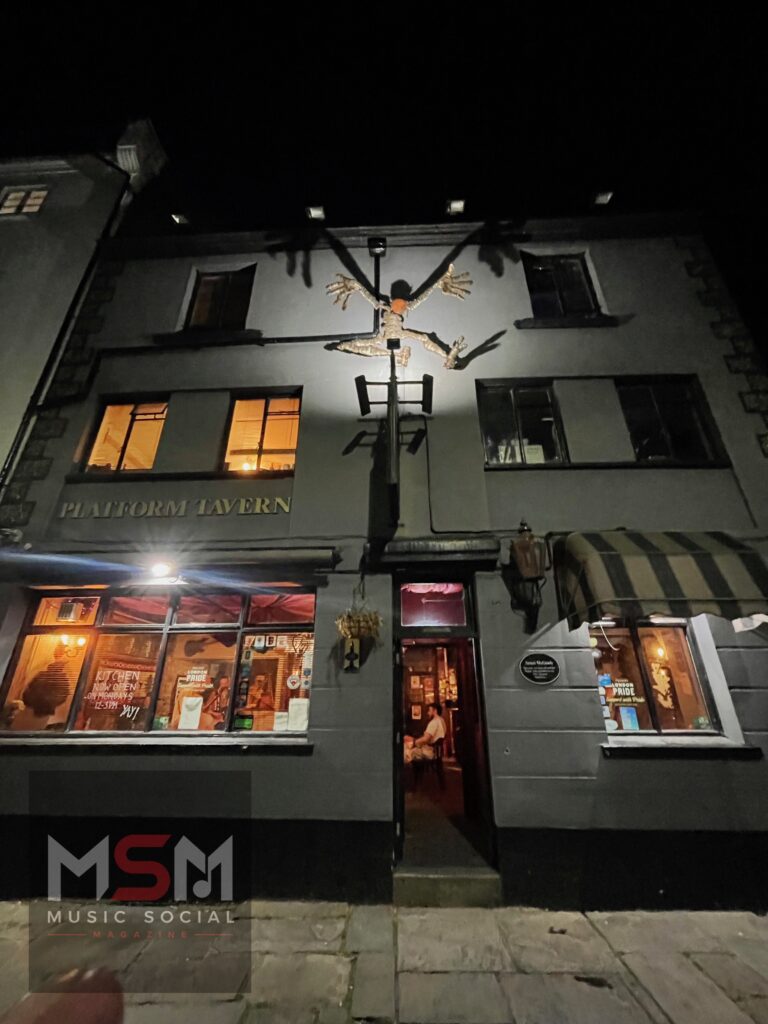
On Thursday evening, tucked away beneath the old stone walls of Southampton’s historic waterfront, The Platform Tavern once again proved why it has quietly become one of the South Coast’s most authentic homes for grassroots live music.
The Blues Social is not simply another pub jam night.
It is something far more organic than that.
It is a gathering of musicians who understand the language of groove, dynamics, restraint, spontaneity and feel. There is no pretence. No ego-driven stagecraft. No attempt to imitate arena performances inside a small room. What exists instead is conversation — genuine musical conversation between experienced players who know instinctively when to push, when to hold back, when to leave space and when to explode into life.
And on this particular evening, everything aligned perfectly.
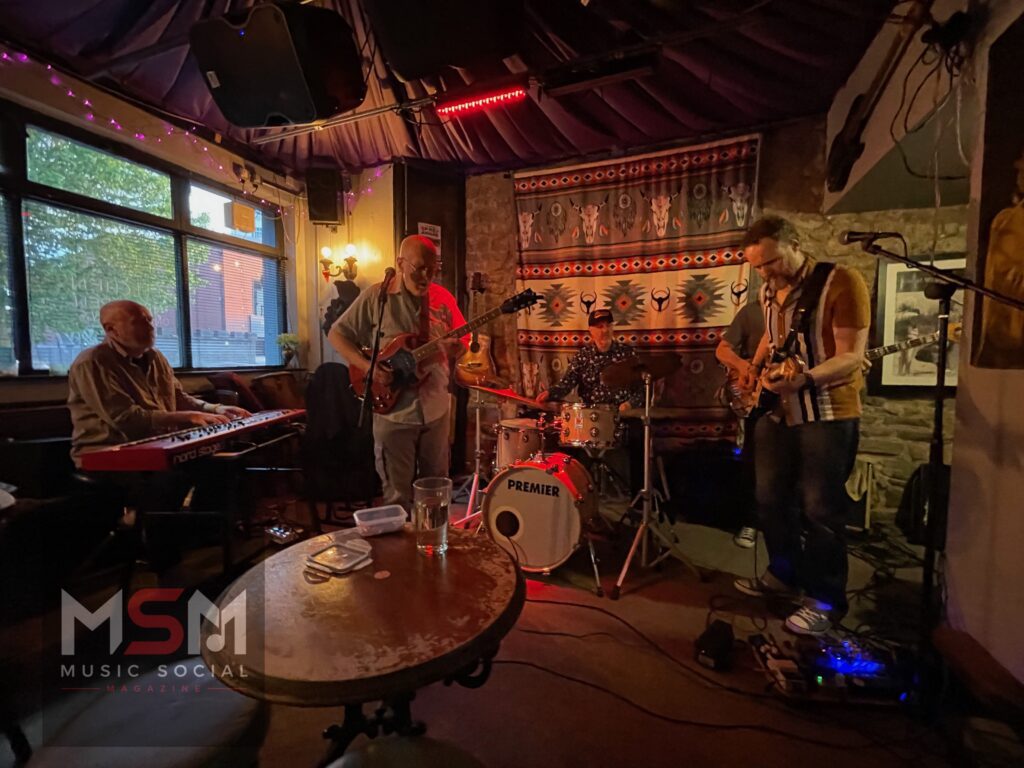
Hosted by the ever-solid Mike Jessop on drums, the lineup featured Pete Harris on guitar and vocals, Mick Downs on lead and rhythm guitar, Rob Marshall on bass and Bill “Smudge” on keyboards. I also had the pleasure of guesting on harmonica during the night while documenting the event for Music Scene Magazine.
From the very first tune, the room felt different.
Not loud.
Not chaotic.
Not forced.
Just alive.
The Platform Tavern itself plays an enormous part in creating that atmosphere. Dating back to 1873 and built directly against Southampton’s medieval town wall from around 1350, the venue carries an authenticity modern venues simply cannot manufacture. The exposed stonework, low ceilings, warm lighting and dockside history seem to compress the room together physically and emotionally. Every note feels close. Every conversation becomes part of the ambience. Even the building’s name derives from the nearby ceremonial gun platform once positioned outside God’s House.
You do not simply attend a gig here.
You inhabit it.
What makes The Platform Tavern especially unique is that its atmosphere is not manufactured nostalgia — it is genuine history still breathing through the building itself.
Long before live blues echoed around the room, the pub served dockers, sailors and workers moving through one of Britain’s great maritime ports. Ale was once brewed onsite for the seamen and labourers frequenting the docks, many of whom lodged in the upstairs rooms while Southampton’s waterfront bustled outside.
The building also carries a direct connection to one of the most famous maritime tragedies in history.
The ill-fated James McGrady — recorded as the final victim recovered following the sinking of the Titanic in 1912 — is believed to have stayed at The Platform Tavern, with the pub listed as his last known address. The tavern itself overlooked the docks where Titanic once stood moored before her maiden voyage, embedding the venue permanently into Southampton’s wider maritime story.
That history still feels present today.
Perhaps that is why nights like The Blues Social feel so authentic within these walls. The room already carries generations of human stories before a single amplifier is switched on. Music here does not feel imported into the venue — it feels woven naturally into the building’s continuing life.
That atmosphere was evident throughout the night as musicians and audience blended into one collective experience. Pints sat quietly on tables while heads nodded unconsciously to the groove. Nobody appeared interested in phones or distractions. The music demanded attention naturally.
And deservedly so.
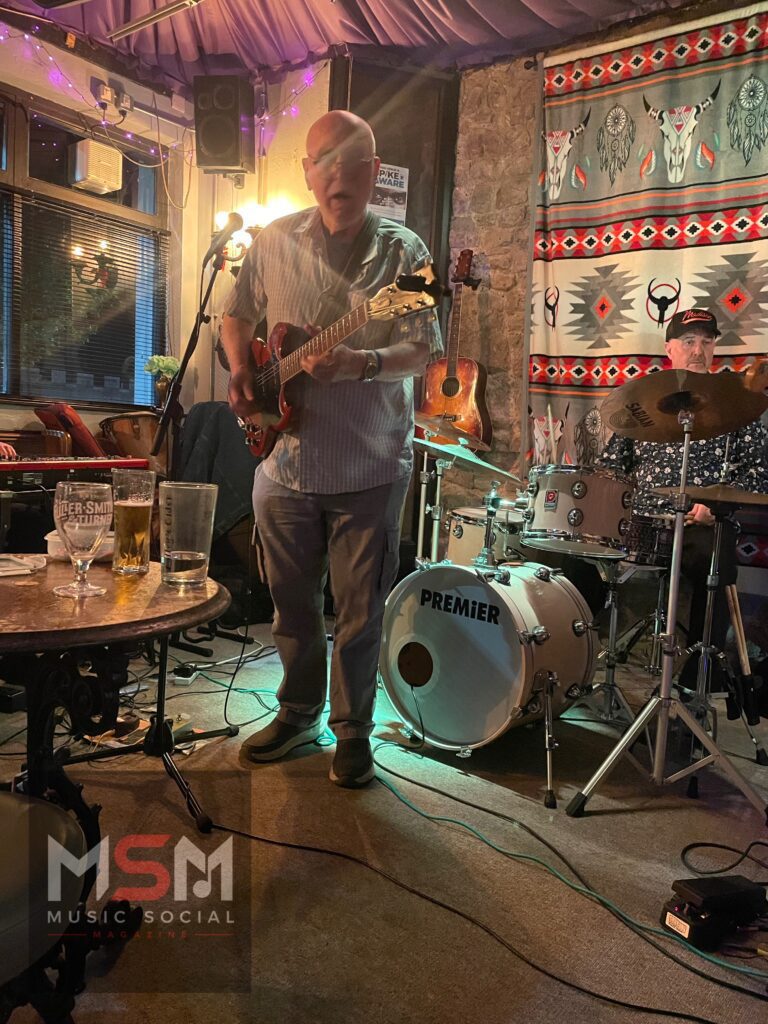
One of the evening’s standout moments came during a superb rendition of “Honey Hush.” Pete Harris delivered the vocal exactly as rhythm & blues should be delivered — relaxed, confident and full of space. Too many singers rush blues material in fear of silence, but Pete understood instinctively that the pauses are just as important as the words themselves. Every held-back phrase allowed the groove underneath to breathe.
And what a groove it was.
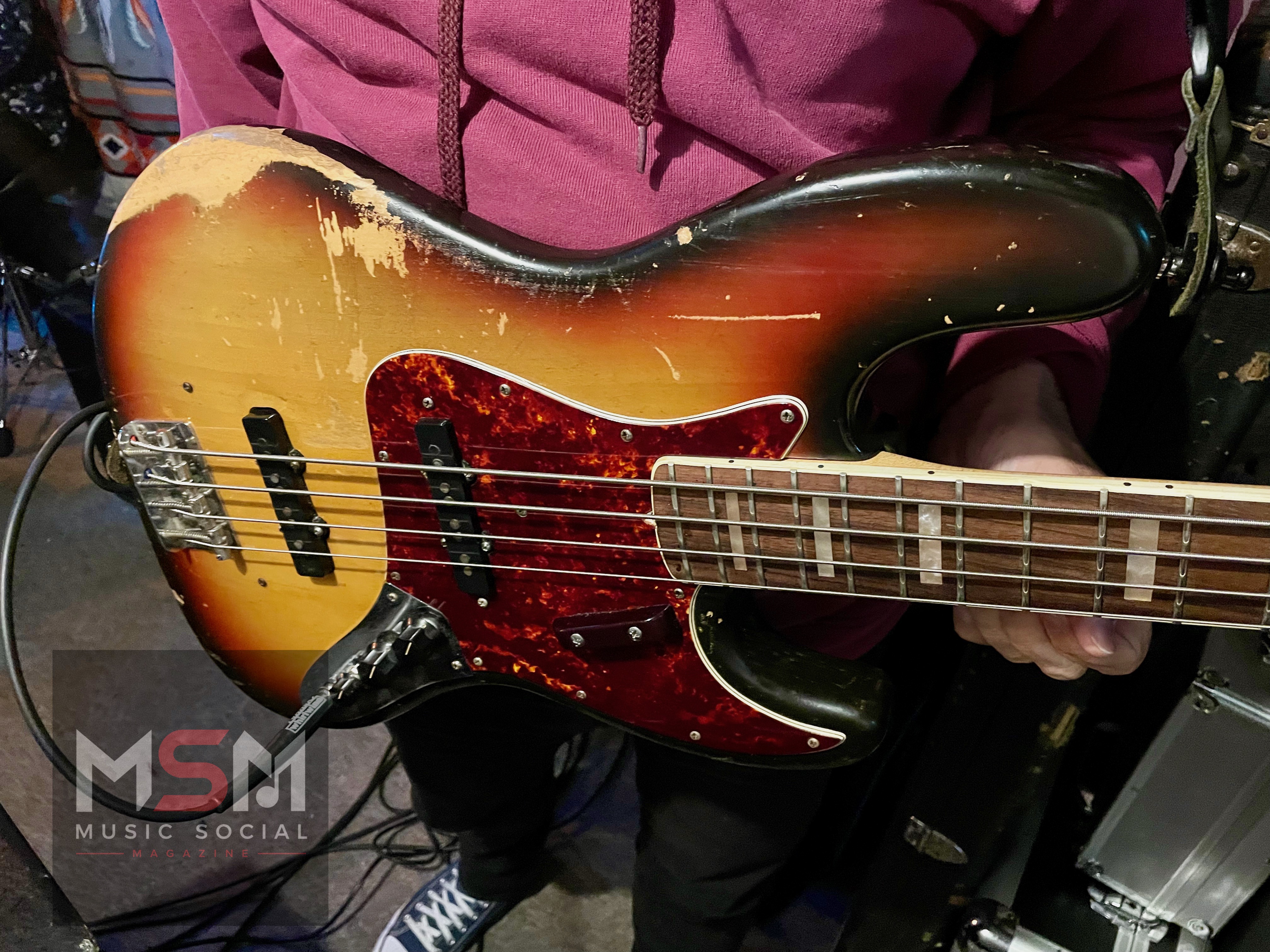
The song rolled along on a glorious swinging rhumba feel that immediately transported the room back toward the roots of jump blues and early rhythm & blues. Rob Marshall’s walking bass line became the engine room of the entire piece. Playing a wonderfully road-worn 1972 Fender Jazz Bass, Rob created movement beneath the band that never stopped dancing. Rob Marshall’s walking bass lines swung with the rolling confidence of a blues mama’s hips. His playing did not simply anchor the harmony — it physically propelled the groove forward, wrapping itself around Mike Jessop’s swinging drums and giving the entire room permission to move with it.
The instrument itself deserved mention in its own right.
Scarred, faded and visibly played for decades, the old Fender carried all the marks of a genuine working musician’s instrument. Worn lacquer, arm wear, buckle rash and age-darkened hardware told stories before a single note even emerged from the amplifier. In an age where many instruments are artificially “relic’d” in factories, this bass possessed something impossible to fake: genuine mileage.
Alongside him, Mike Jessop demonstrated exactly why experienced drummers become the backbone of nights like these. Sitting behind a compact Premier kit perfectly suited to the intimate room, Mike never overplayed for a second. Instead, he controlled the feel through touch, rebound and timing. His sticks appeared almost to float between finger and thumb, allowing natural rebound to create subtle ghost notes and rhythmic lift beneath the rest of the band.
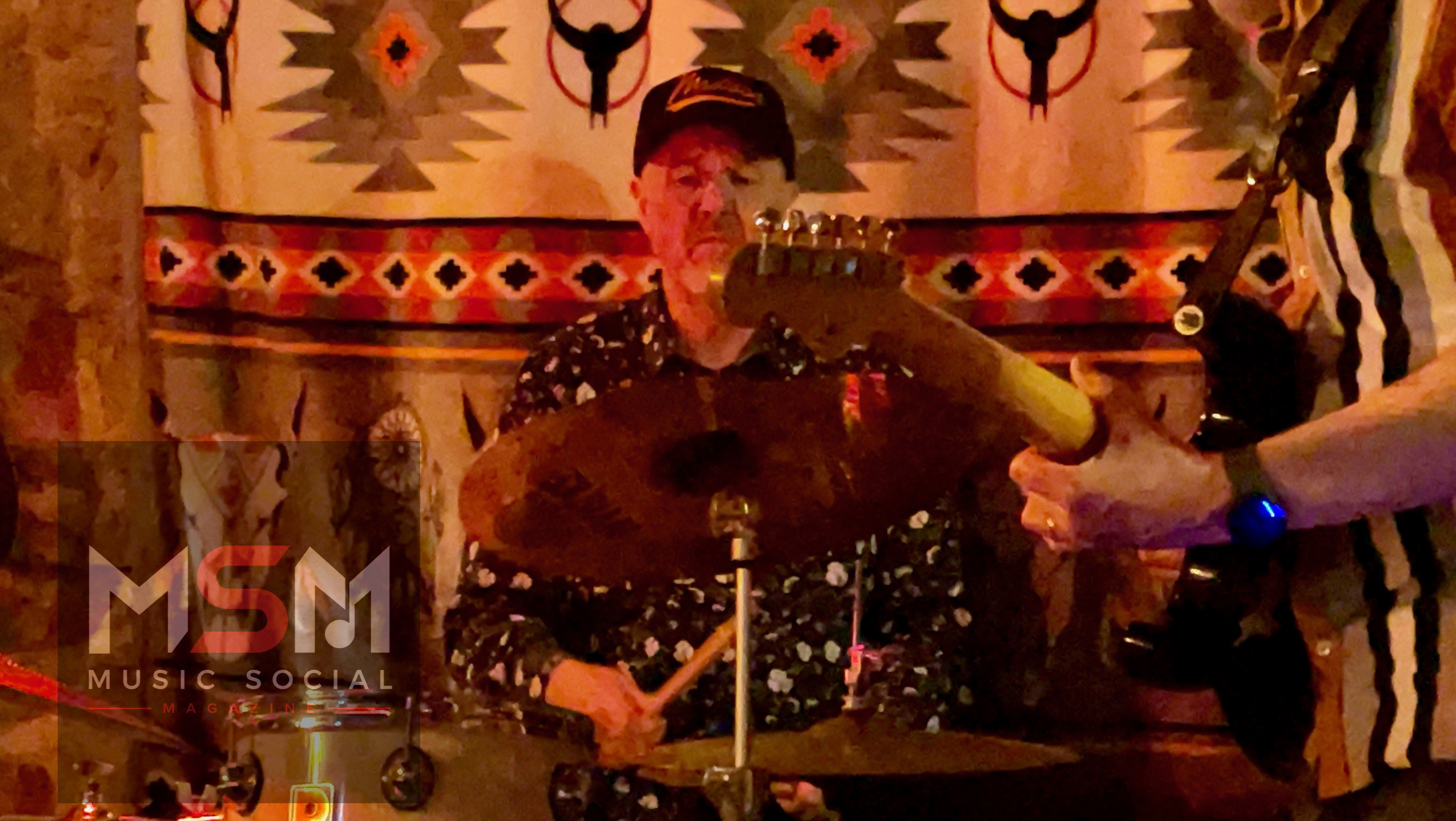
Watching him closely revealed the true craft of blues drumming.
Nothing looked forced.
The fills arrived naturally. The snare snapped precisely when needed. The ride cymbal carried the pulse effortlessly across the room while the kick drum remained warm and understated beneath everything else. It was deeply musical drumming rooted in swing rather than power — the sort of drumming that quietly elevates an entire band without demanding attention for itself.
And then there was Bill “Smudge.”
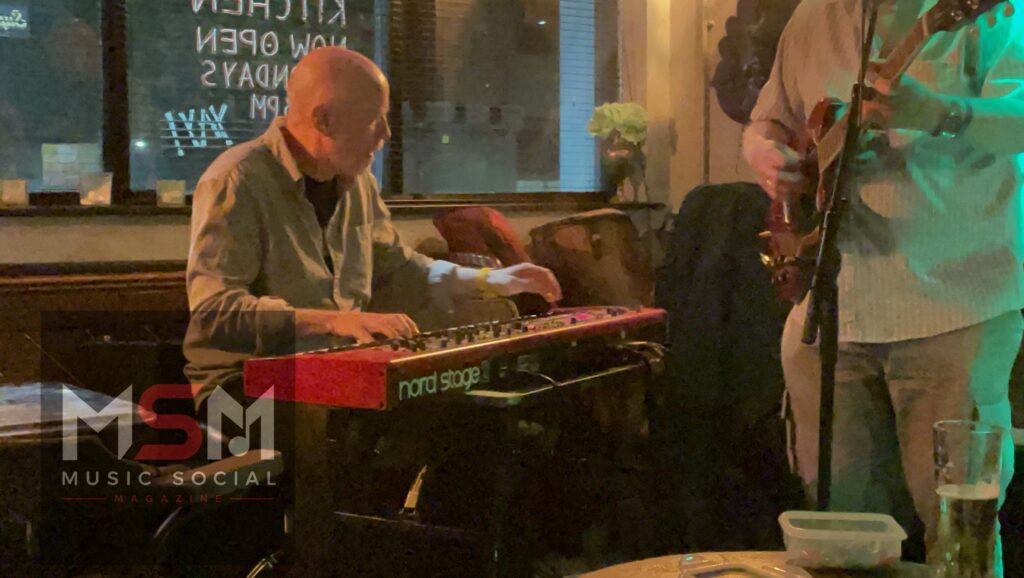
At several points during the evening, Bill appeared utterly consumed by the music in the most wonderful way imaginable. Positioned behind his red Nord Stage 2, he shifted constantly between delicate top-end fills and full-bodied harmonic explosions. One extended jam saw him tearing across the keyboard with octaves, blues phrases, jazz harmonies and gospel-inspired voicings while simultaneously tweaking switches and controls mid-performance.
It was mesmerising to watch.
More importantly, it was thrilling to observe the reactions from the other musicians while it happened.
At one point during Bill’s improvisation, guitarist Mick Downs could be seen grinning broadly across the stage like a Cheshire cat as the keyboard lines pushed the band into fresh territory. That single expression perhaps summed up the evening better than any technical description ever could.
Because the defining characteristic of this night was joy.
Not polished professionalism for its own sake.
Not rehearsed perfection.
Not musicians simply “doing a job.”
Joy.
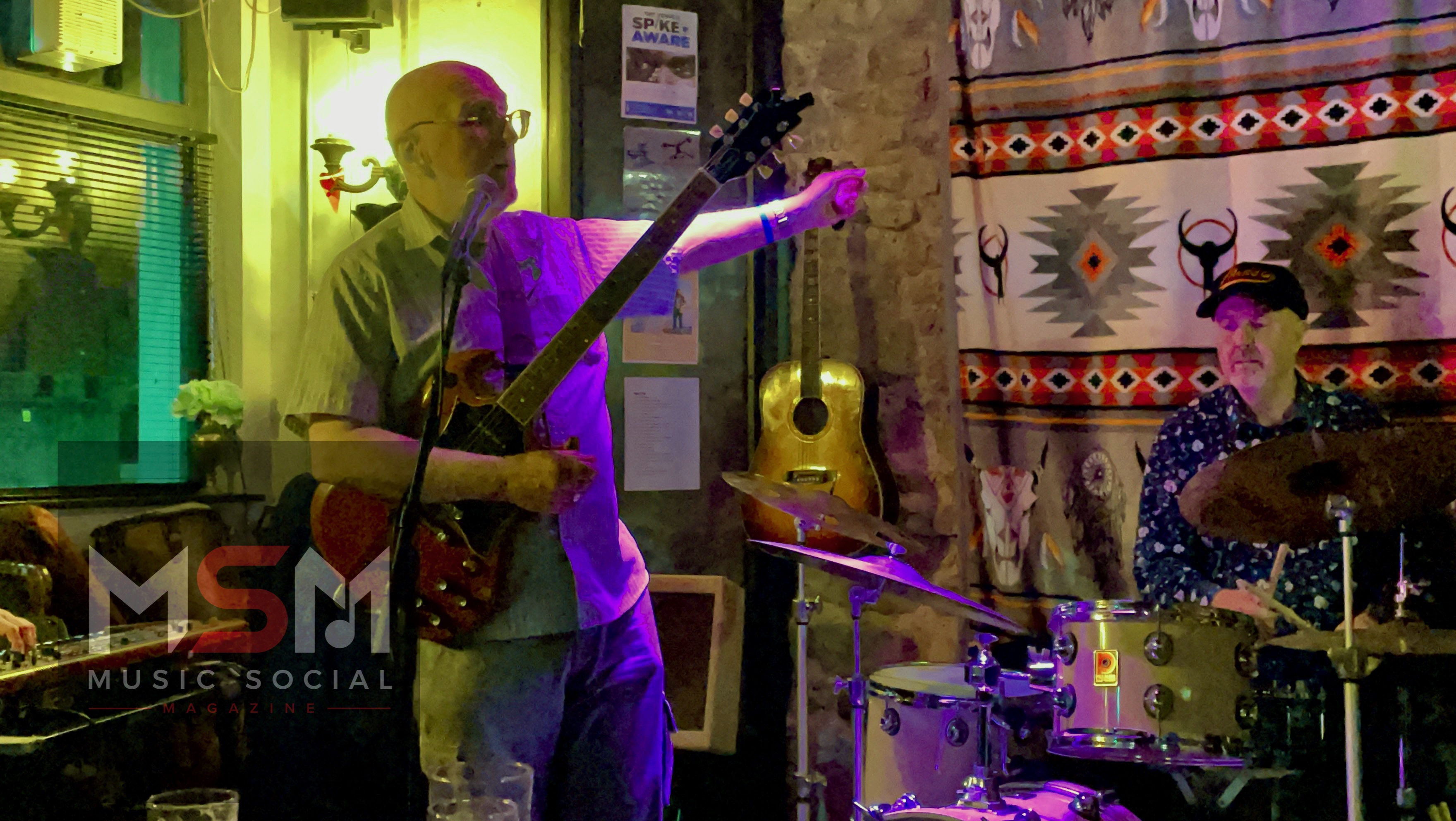
The visible excitement musicians experience when another player surprises them unexpectedly. The tiny smiles exchanged after a perfectly landed phrase. The unconscious body language of players locking into the same groove together. These moments cannot be staged and cannot be taught.
They simply happen when musicians trust each other.
Mick Downs himself delivered some of the evening’s most emotionally charged moments. Playing his wonderfully eccentric “Frankenstein” guitar — built around a 1990 Japanese Squier fitted with Tex-Mex pickups and custom phase-switching modifications — Mick’s sound constantly shifted between warm blues sustain and wonderfully nasal, cutting out-of-phase tones.
The guitar almost appeared to dictate its own personality.
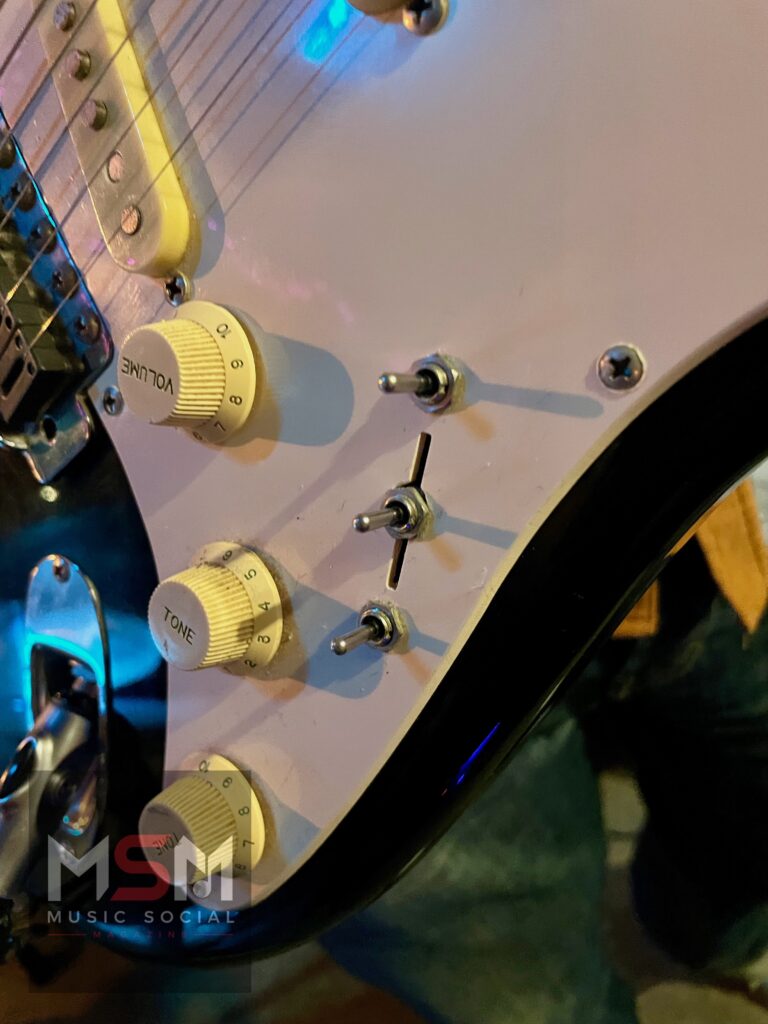
Rather than relying on familiar blues-rock clichés, Mick explored textures and phrasing in ways that felt deeply individual. Watching him play became fascinating in itself. At times his facial expressions seemed to mirror the emotional tension of the notes leaving the amplifier — eyes closed tightly, jaw clenched slightly, shoulders leaning physically into sustained bends as if willing the notes directly from the instrument.
Several songs evolved naturally into sprawling improvisational jams lasting close to ten minutes, yet never once did the room lose interest. That is the sign of genuine musicianship.
Lesser bands can stretch songs endlessly and drain all life from them. Here, the opposite occurred. The deeper the musicians travelled into the groove, the more engrossed the room became. Players listened intently to each other, responding in real time rather than waiting mechanically for their next turn.
This was not showing off.
It was communication.
That distinction matters enormously.
In today’s increasingly digital and programmed world, there is something profoundly refreshing about witnessing musicians genuinely reacting to each other moment by moment. Songs became living things rather than rigid arrangements. A bass line might shift slightly and suddenly the drummer responds differently. A keyboard phrase inspires a guitarist to take a melodic risk. A vocal pause opens space for harmonica to answer.
Everything remained fluid.
And in rooms like The Platform Tavern, audiences feel that authenticity instantly.
The venue itself deserves enormous credit for preserving this spirit. Stuart, the landlord, clearly understands something many venues have forgotten: live music is not background decoration for a pub — it is part of the pub’s identity and culture. That attitude changes everything. Musicians relax because they feel welcomed rather than tolerated. Audiences engage more deeply because the environment feels genuine. Over time, nights like The Blues Social stop becoming “events” and instead become communities.
That sense of community was present everywhere throughout the evening.
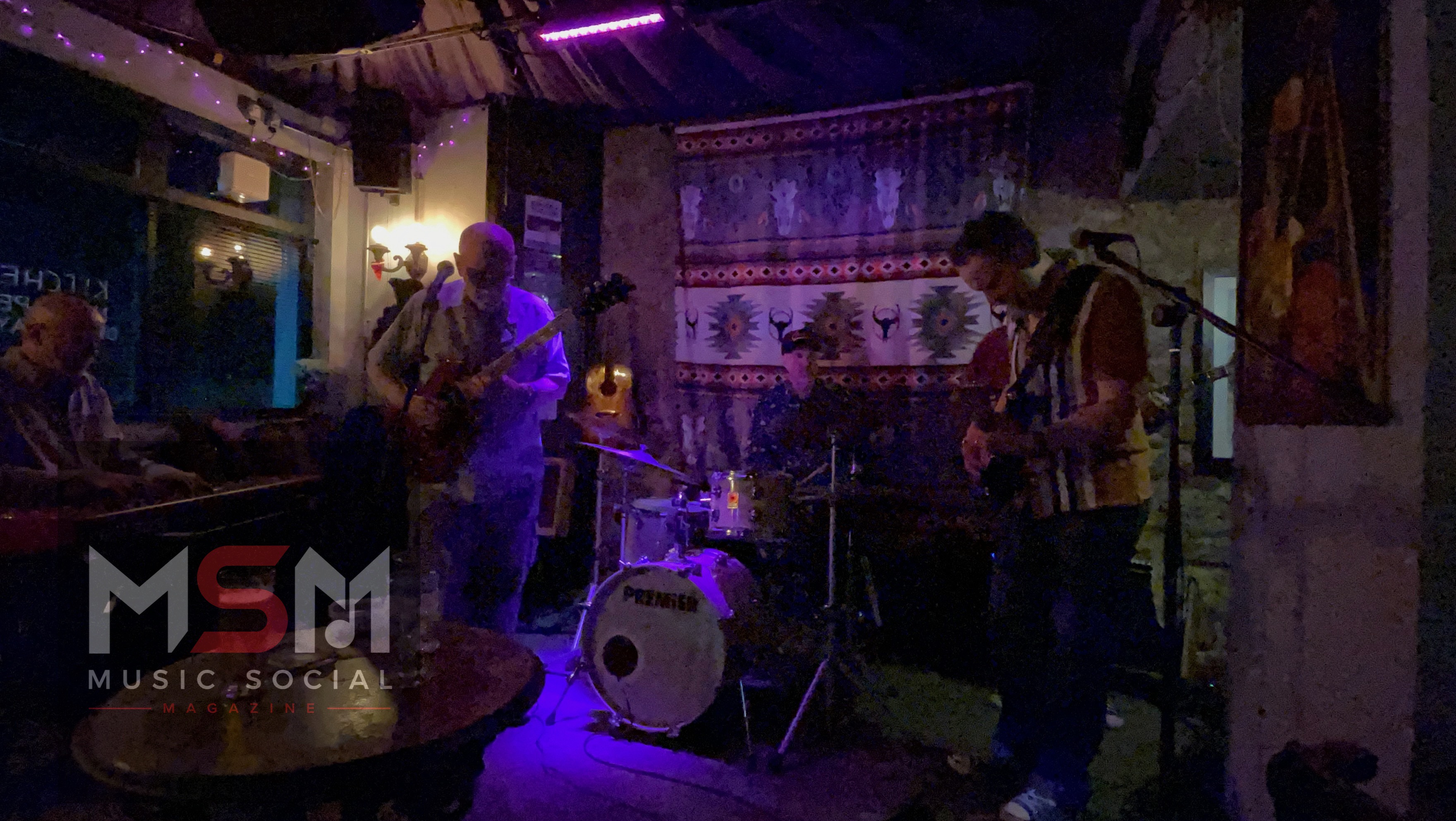
By the end of the night, the room no longer felt like performers and audience occupying separate spaces. Instead, it resembled a shared musical gathering unfolding inside one of Southampton’s oldest surviving taverns. Beneath medieval stone walls and low purple lighting, surrounded by pints, laughter, cables and amplifiers, the music ceased being performance and became experience.
And perhaps that is the real importance of nights like these.
Grassroots live music is not solely about entertainment.
It is about preserving human connection.
It is about experienced musicians passing knowledge, feel and instinct between each other in real time. It is about venues maintaining cultural identity within cities increasingly dominated by chain uniformity and disposable experiences. It is about rooms where mistakes, risks, spontaneity and joy are still allowed to exist naturally.
Most importantly, it is about moments that cannot ever be replicated exactly the same way again.
On Thursday evening at The Platform Tavern, Southampton witnessed one of those moments.
And long may places like this continue to keep the groove alive.
Hey Bryan!
Thanks for your lovely review.
You got what we are all tying to achieve live at The Platform, a framework for expression. I’m glad you enjoyed it.
See you again sometime.
Kind regards
Mike Jessop
Hi Mike,
Thank you for taking the time to leave a comment — I genuinely appreciate it.
I think what struck me most was that it never felt like musicians simply turning up and playing songs. It felt like people creating something together in the moment and enjoying the freedom to take it wherever the music wanted to go. That atmosphere came across very naturally.
Looking forward to getting back down again sometime.
Bryan
Music Scene Magazine
Thank you Bryan, it was a great night, and yours piece really does capture the ethos of Mike Jessop’s Blues Social.
Hi Mick,
Thank you, I really appreciate that. One of the things I enjoyed most was that it never felt like a room full of musicians simply playing through songs — it felt like people creating something together in real time and taking everyone along for the ride.
Nights like that are exactly why MSM exists.
Looking forward to getting back down there again soon.
Bryan
Music Scene Magazine